My Historical Guide to Guides
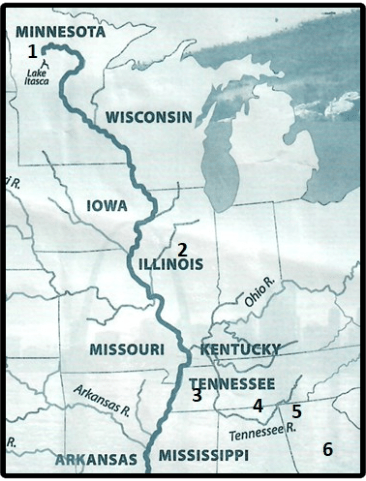
The government shutdown presented me with a glorious opportunity to realize a lifelong fantasy of mine — to become a park ranger and guide at a Civil War battlefield. The shutdown coincided with a road trip with my friend of 40+ years, Steve, who lives in Minnesota [1]. Earlier this year we planned to meet in Bloomington, Illinois and drive via Route 66 to Springfield [2] where we could “get our Lincoln on” (taking in his museum, house and tomb) followed by trips to the Shiloh battlefield in Tennessee [3]; Huntsville, Alabama (the U.S. Space and Rocket Museum) [4]; and the battlefields of Chattanooga and Chickamauga [5] before Steve drove me back to Atlanta before returning to his home in Minnesota. (Did I tell you that he loves to drive?)
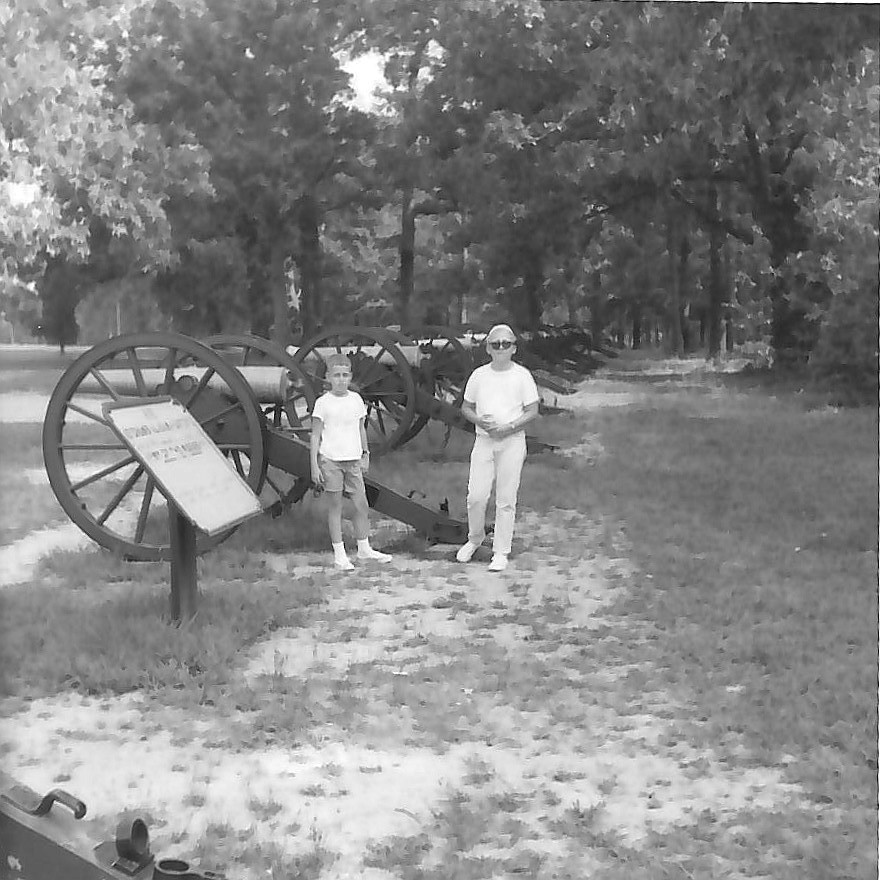

This mission began when as a 10-year-old, I visited Shiloh with my older brother and parents. We drove from Illinois to visit southwestern Tennessee, then onto Lookout Mountain in Chattanooga and finally the Cyclorama in Atlanta. As a youth I read everything about the Civil War and practically memorized Robert E. Alter’s Heroes in Blue and Gray, a concise encapsulation— including maps and illustrations— of the major battles written at the junior high reading level
This passion led to my “lecture series” to two sections of a Milford (IL) Township High School American history class. The history teacher found out about me when my brother stood out in his class for his own knowledge about the War Between the States and told the teacher “If you think I know a lot, you should meet my brother.” After two lectures the local newspaper christened me “a sixth-grade Civil War buff.”
But was this to be my zenith as a Civil War Authority?
This experience ignited a youthful dream of becoming a park ranger. Even today I can see myself in crisp khaki pants and a forest green shirt, but that rigid flat-brimmed ranger hat could be problematic, making my head appear larger than it already is. This career dream had vaporized until recently with the coincidence of the shutdown and the planned road trip. There were no park rangers at the battlefields where Steve and I planned on visiting. Maybe I could just fill in?
Experiencing Guides
At this point in my life, I have had a lot of experiences with guides. I am much older and I have done considerable traveling with my longtime partner, Denise. Often when we arrive in a new city, state or country (Spain, Amsterdam, Berlin, Ghent, South Carolina, Halifax, Oregon, Montreal, Paris, Istanbul) we do a walking tour first. Through the years, I have followed all kinds of guides of different ages and genders. I started making a few notes as patterns emerged. Here’s a recap.
The Educator
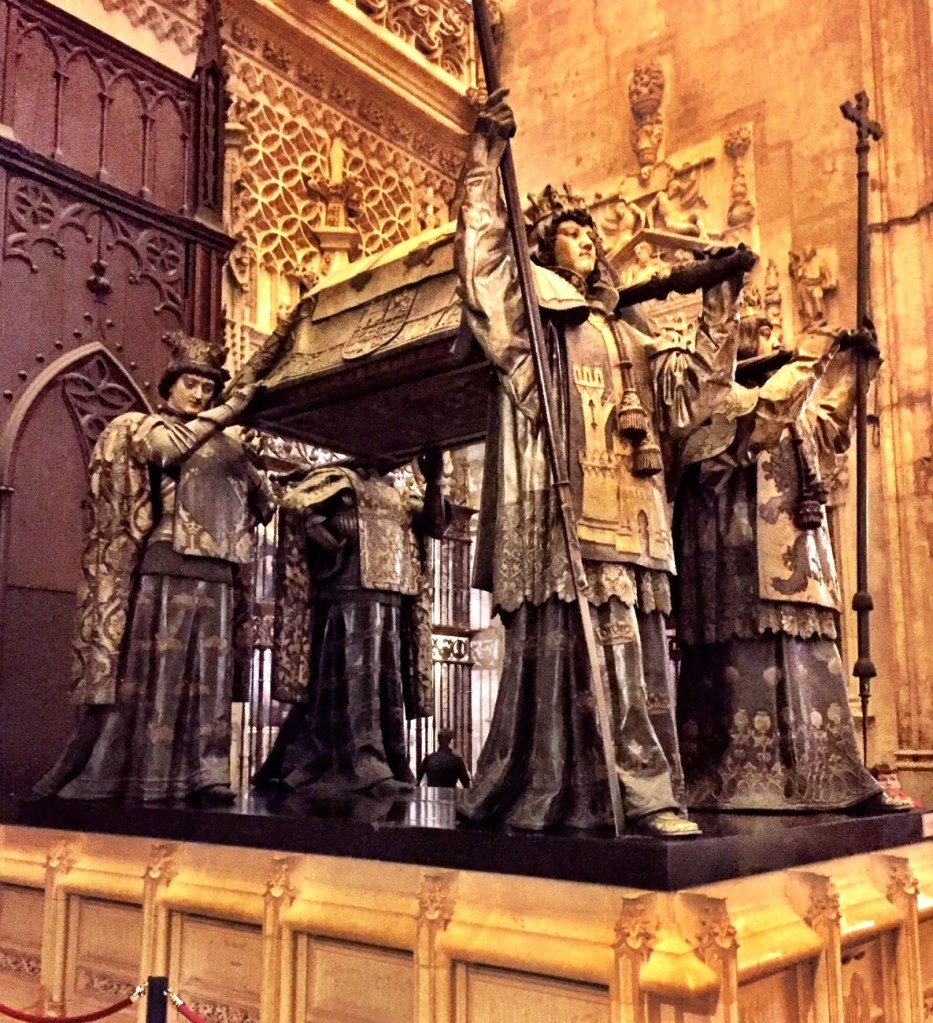
This is often a retired schoolteacher who is relieved not be lecturing high schoolers. They are knowledgeable and know how to edit themselves. If I leave the country with one Fun Fact I am satisfied. For example, the Dutch windmill led to their ability to saw wood and build ships which led to their emergence as a naval power or that Columbus insisted on not being buried in Spanish soil so his sarcophagus was permanently hoisted on shoulders of pallbearers in the Cathedral in Seville. However, Fun Facts can be taken to the extreme.
Earlier last fall on a food tour in the Jewish section of Montreal, a young woman and a recent graduate of Jewish studies at McGill University did a “core dump” of two hundred years of Jewish migration patterns before we received our first puff pastry stuffed with cheese.
Little did she know that waiting for food shortens my attention span.
The Bullwhacker
For those unfamiliar with this term, it originated in the Old West before railroads connected towns and freight was hauled by oxen-powered wagons. A bullwhacker was a man or woman (e.g. Calamity Jane was a bullwhacker) who persuaded via the whip to keep livestock moving. To me—and maybe this is my age—I expanded the definition to a guide who kowtows to a rigid schedule and refuses to plan for water, rest or toilet breaks as the group trudges onward.
In the Belgium town of Ghent, Denise and I fell so far behind the tour that we just peeled off the walking peloton and sought refuge in a restaurant specializing in chocolate crepes.
More recently when I was lagging on a history walking tour in Montreal, I found out later that one of my fellow tourists recommended that I be “cut loose” because I was moving too slow. But our leader wouldn’t hear of it. A bullwhacker with a conscience.
The Aggressive Advocate
Similarly, there are guides with strong personalities who are willing to get up in the face of locals or tourists. Our walking tour guide in Paris cursed another guide (in French) for pedaling their bikes on the peaceful walking paths of the Place des Vosges park. At the Citadel overlooking Halifax, Nova Scotia, our burly guide/driver led us past the authorities so we could see the ceremonial changing of the guard without paying. This same driver referred to anyone standing in his way as a “schmucky boy.” This term has since lived on as part of my traveling lexicon.
Our guide in Istanbul, though he was authorized to do so, was fearless in bulldozing through the mass of tourists at the entrances of the Hagia Sophia and the Topkapi Palace. Later, he boldly took us to one of local markets (not the Grand Bazaar) where he bargained with vendors on our behalf.
The Entertainer
Sometimes it seems as if tour guides are local actors that take on gigs to supplement their income. Once on a walking tour of historic Beaufort, South Carolina, our group was led by a tall, regal man with grey flowing hair and a booming voice. He marched us through the streets, punctuating his stories with wild swinging arms. (Often you can tell this variety of guides by their passionate gesticulations.) But these entertainers, can go to the extreme. On a lighthouse tour in coastal Oregon, a man and a woman were dressed up as lighthouse keepers from the late 19th century and provided us with insights on the isolated life of those times. Suddenly, the woman re-enactor said (in all seriousness), “Excuse me, I have to break character to make an announcement.”
The Insecure
These guides are the ones who are the most unpredictable. A good example comes from my experience with at (now historical) Tempelhof Airport in Berlin.
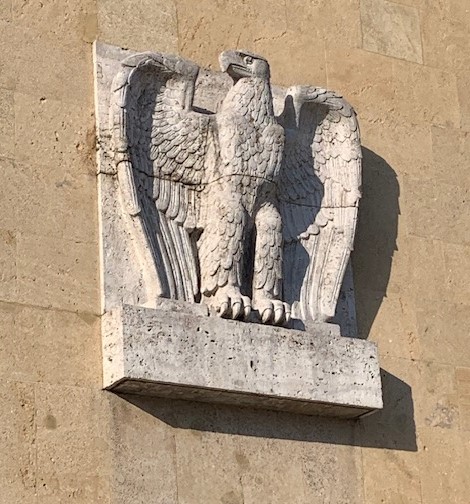
Designed in part by Albert Speer in the 1930s as a showcase of Nazi strength and brilliance, this structure sustained minimum damage to its main terminal because the Allied High Command realized it could prove to be useful once Berlin fell. I asked the tour guide to elaborate on the last days of the airport when high ranking German officials and the Allied commanders were flown in for Germany’s surrender. (I had made the mistake of reading Anthony Beevor’s The Fall of Berlin 1945 ahead of time.
Unexpectedly, the guide snapped at me in front of the entire tour: “Do not ask me any questions that I cannot answer!” as if I were trying to trip him up. But this was not the case; instead, perhaps, not-so-deep down, I was gunning to be the star pupil like I was in front of that high school class back in 1967. Reclaim past glories.
Either way. No post tour tip for him.
The Kidnapper
Beware of these guides.
This happens when the tour guide goes rogue and instead of delivering the tour you signed up for, the guide takes you where they think “you should be.” This happened to Denise and myself on a car ride from San Sebastian to Bilbao in the Basque region of Spain. The guide was very proud of his Basque heritage and insisted that we include the town of Guernica on our trip.
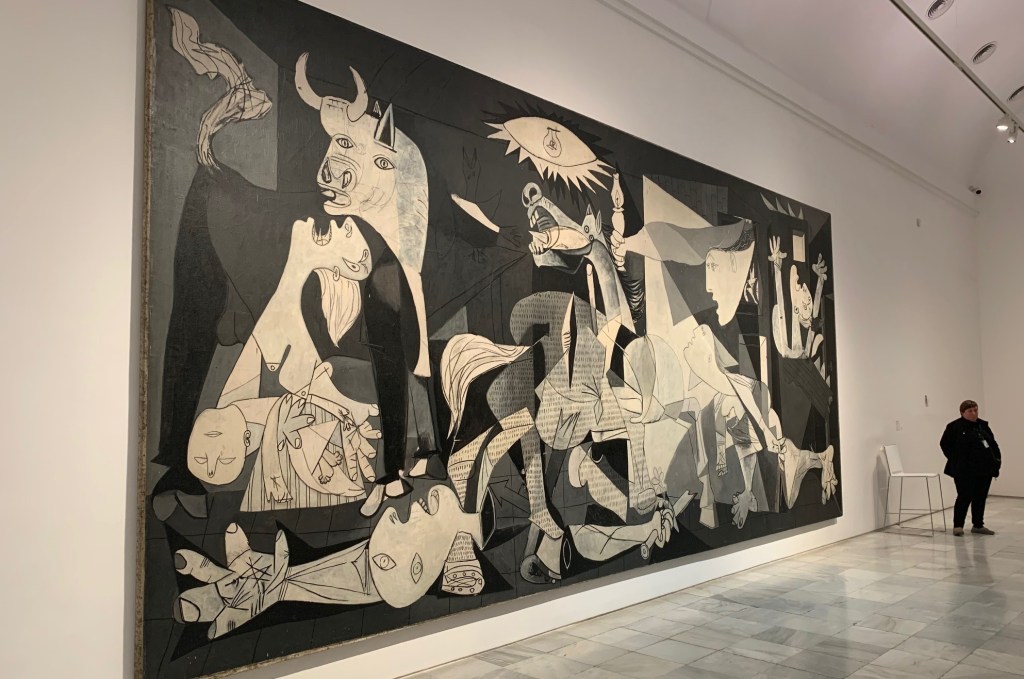
Guernica has historical significance in the history of the region not only as a pillar of democracy, but because it was bombed by the Germans in 1937 and the subject of Pablo Picasso’s famous painting. It was one of the first cities where noncombatant civilians were bombed by airplanes as part of the Nazi military strategy. Denise made it clear beforehand we were interested in spending our limited time at other sites as we had already seen the Picasso painting in Madrid and read detailed histories about Guernica beforehand. But our guide didn’t care. Considering he was driving the car, we became his prisoners.
Adding to this unpleasantness, in his haste to shoehorn this side trip into the schedule, he took off in the car before Denise was all the way in the vehicle, severely twisting her knee. (He must have worried about the repercussions following these incidents, and tried to appease us with showing us the pastry shops of Bilbao.)
A similar experience happened when I was on a paddlewheel boat trip with my older daughter, Cynthia, on the Mississippi from New Orleans to Chalmette Battlefield just outside the city. On the way to the site where Andrew Jackson defeated the British redcoats our guide Charles provided a standard historical tour, filling us in on points of interest. But on the 45-minute return trip Charles gave us and several hundred other tourists an onslaught of excruciating details on Hurricane Katrina’s 2005 destruction of the city. Yes, it was tragic saga of suffering, but the bitter narrator went on and on. And he even failed to recite the famous George W. Bush quote in which he (unironically) summarized FEMA director Michael Brown’s performance: “Brownie, you’re doing a heckuva job.”
Since jumping overboard was not an option, my daughter and I felt we were at his mercy. As we approached the dock Charles said he’d be at the gangplank to answer any questions and tips would be appreciated. I watched from one of the decks as other tourists disembarked but only a few rewarded him. More notably was one woman’s reaction scolding him as she drove her finger into his chest. She didn’t appreciate being shanghaied either.
What Kind of Guide Would I Be?
So I ask myself, “What kind of guide would I be?” Like a teacher, could I get motivated to get in front of people tour after tour, day after day or would I soon tire of repeating the same trite things such as “There are no stupid questions” and thus risk becoming snarky and saying: “There are no stupid questions, just stupid people who ask questions.”
And if I were leading a tour could I handle it when a tourist challenged my expertise (and potentially pointing out all my shortcomings on Trip Advisor). Conversely, a tourist that laughed in agreement at all my jokes or was uber fascinated by my every word would also raise my suspicions.
Back to Shiloh
All these doubts came to mind when Steve and I drove up to he Shiloh National Military Park on a gray, misty morning in October around noon. There was a small gathering of men and women hovering in front of the closed Visitor Center – victims of the longest government shutdown in U.S. history.
I imagined walking up to the group and breaking the ice with a Fun Fact. “Did you know that Shiloh was William Faulkner’s favorite Civil War battlefield?” But instead of offering my services I just froze – unwilling to pull the trigger. These folks were from nearby Western Tennessee and quickly decided that they could come back at a later date. My opportunity was lost.
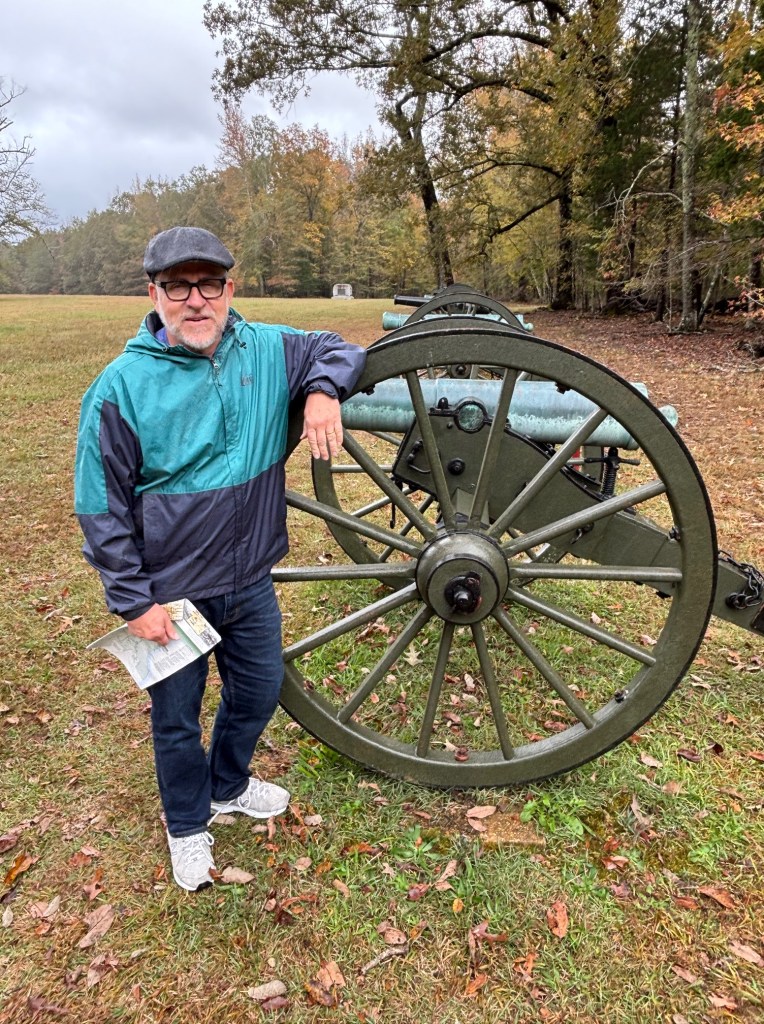
I pondered this as Steve and I drove and stopped along the markers of Shiloh Church, Ruggles’ Battery, Hornet’s Nest and Bloody Pond. Visitors were few and far between and the mist had now turned into a steady drizzle.
Jokingly to myself, I realized that maybe not realizing my early career dreams was a good thing.
Final Tip
In addition to learning about why sculptors often left off one of Lincoln’s ears, that Ruggles’ battery lives forever, and how the Air & Space Museum downplayed the Nazi collaborator Werner Von Braun’s role in developing rockets for NASA, I learned something about myself.
I had finally outgrown my fantasy of being a Civil War battlefield guide, while appreciating all the different kinds of guides. And most of the time they are all worthy of a cash tip, except for The Kidnappers whose only tip should be that you didn’t write up a two-star online review on their controlling behavior. For the Insecure, a small turn-the-cheek kind of tip might be in order to just mess with their heads.
And if they are the kind of guide that knows where to take the best picture at the best spot with the best lighting (with your best partner-guide), then you should fully appreciate their knowledge.
Double the gratuity.
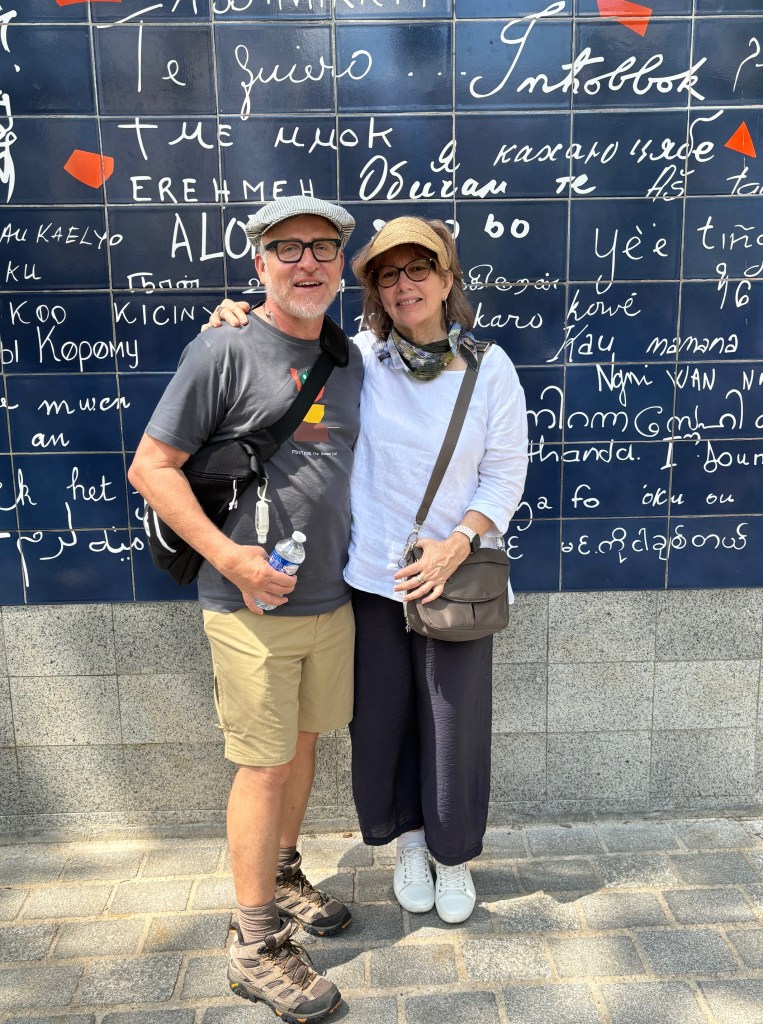
Credits: Photo credits. Shiloh 1966, Glenn R. Browne; Columbus, Murray Browne; Eagle emblem, Murray Browne; Guernica painting, Murray Browne; Shiloh 2025 Steven Briggs; Wall of Love, Montmartre, Paris, Emmanuel Tostain. Editorial Credits, Francis Walker and Denise Casey; Driver and Professional Wheel Man, Steven Briggs.
 murraybrowne.org