Beware: This is a core dump of the The Book Shopper blog. It’s not cleaned up and may never be, but I had to move everything off of Typepad (my old platform) in a short time. As Dante said: “All hope abandon, ye who enter here.”
On April 1, 2026 I removed the Archive and began a rebuild.
TITLE:
A Book’s Historical Moment
DATE: 08/30/2025
October marks the second anniversary of the publication of a Father’s Letters: Connecting Past to Present. Not much sales-wise, but the book has had its moments.
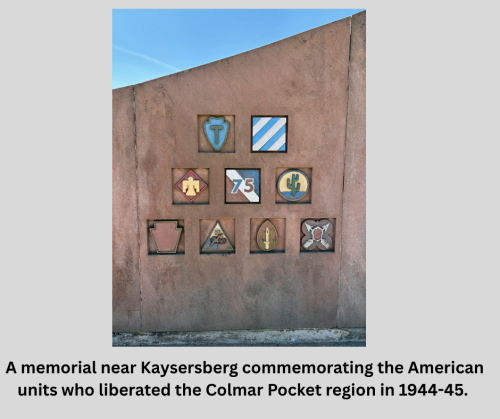
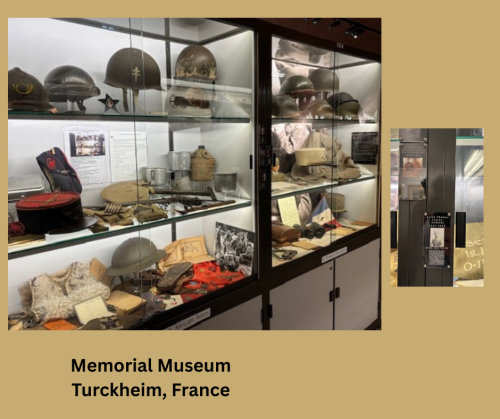
In June of this year my longtime partner Denise and I went to Turckheim, France a small village outside of Colmar in the Alsace region of the country. This was where my father fought in World War II eighty years ago and his experiences are detailed in one of the chapters of Father’s Letters. Turckheim is the home of The Memorial Museum of Colmar and Denise and I visited it and as you would expect, I brought a couple of copies of the book. A young woman Angelique Freydrich at the front desk spoke perfect English and immediately welcomed us and the book. She gave us a personal tour of the museum and promised to show the book to the museum’s archivist Laurent Klopfer.
Angelique said that the museum did not have as much information about the U.S. soldiers as they did the French and German combatants and she thought that my father’s story would be a fine addition to the museum. The way it works is that they curators put a QR code with the soldier’s portrait photograph. Visitors can click on the code and the whole story pops up on their phone. When I returned stateside, I contacted Angelique and Laurent and they made it easy for me to upload my father’s narrative. (Click below)
This experience made doing the whole book worthwhile. And I cherish the thought that my father is enshrined with the men who fought with him in World War II.
September 15, 2025 would have been my father’s 100th birthday.
End of an Era
DATE: 08/24/2025
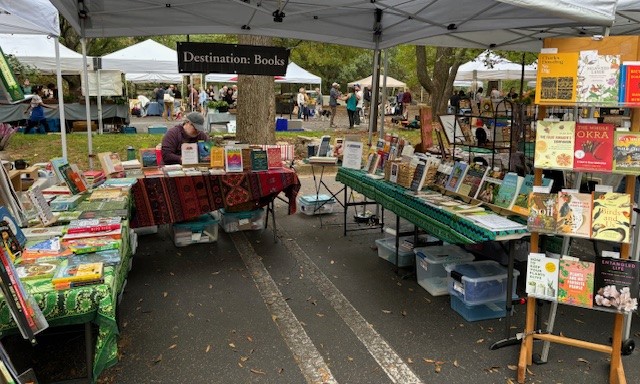
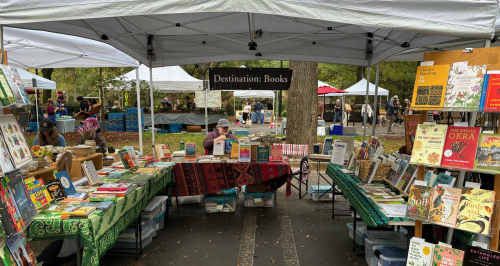
Mark Burell at the Freedom Farmer’s Market (Nov. 2024)
The Carlos Museum on the Emory University campus announced that its Bookshop will close permanently on September 29, 2025. The closing coincides with the retirement of Mark Burell, one of the visionaries who opened the shop 32 years ago and manages it to this day.
Mark and I go back even before I arrived in Atlanta in 2007. My longtime partner Denise moved to Atlanta ahead of me in January 2007 and visited his shop. Knowing that I was looking for a publisher for my The Book Shopper manuscript, she purchased a copy of Gabriel Zaid’s So Many Books* published by Paul Dry Books of Philadelphia. We recognized that this small book had the same kind of vibe as mine so eventually I reached out to Paul Dry. After a lot of editing and polishing by many people (led by Denise) it was published in 2009.
Atlanta is not much of a book-lover’s city, and Mark’s shop filled a need for a well-curated bookstore. It has been the only bookshop that I took out-of-town visitors to over the last decade and a half. Mark suggested many of the books that I bought at his store.
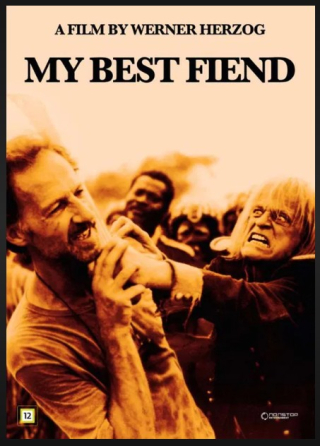
During the pandemic Mark joined my retirement gig—the pop-up book stall Destination Books. From 2021 to 2024 we sold together at the Carter Center’s Freedom Farmers Market, weathering hot humid summers and chilly late fall mornings. (That’s Mark in booth picture.) the All the time he was generous in showing me the ropes in dealing with publishers and book distributors. During the lulls in customer traffic, we chatted about books, travel, and films. He even let me borrow his DVDs of films by director Werner Herzog, so later I understood the origins of his strong Klaus Kinski-like reaction when some boor photographed a book only to (presumably) order it online. (“GET OUT OF HERE, I WILL NOT SELL YOU A BOOK EVEN IF YOU BEGGED ME!”).
If you want more specific details about the Carlos Museum’s decision to close the shop, visit their pagehere. But as for me, I want to extend a personal appreciation to Mark for how much I learned from him, not only as a fellow bookseller, but from the books he recommended. Although it was a small shop (though Mark really crammed in the inventory), its loss will leave a big hole in the Atlanta reading community.
I wish him the best in the next stage of his life. And if he wants any reciprocal advice from me, may l suggest that he read my 60-page retirement narrative A Father’s Letters, Connecting Past to Present.
* Coincidently, a new edition of So Many Books will be published in October by Paul Dry Books. A review is found here.
Swiss Reading Notes
7/16/26
Last summer The Book Shopper visited Paris, Norway and Sweden and published notes for those excursions. In the same tradition, Denise and I just returned from spending almost a month in Switzerland—riding the trains, eating pork schnitzel, and accompanying our grandchildren to amazing playgrounds, but books and writers also play a part in our traveling experience and this year was no different.
Accompanying Books
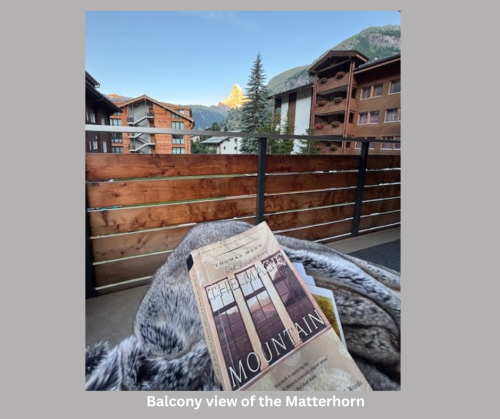
When preparing to travel I always select a whopper of a book to accompany me. One never knows when there will an airline strike or a power outage and you are stuck for hours with nothing to keep your mind occupied except complaining. Therefore, you want to pack something thick and relevant. Last year it was Norwegian writer Karl Ove Knausgaard’s My Struggle Books 2 and 3. This year it was Thomas Mann’s 700-page classic The Magic Mountain.
Published just over a hundred years ago, Mann’s wide sweeping novel tells the story of Han Castrop who visits his cousin Joachim at a sanitarium in the Swiss Alps near Davos just after the turn of the century. Intending to stay only a few weeks, Castrop ends up staying for years (Welcome to the Hotel California). It’s a wide sweeping novel that transforms one to a place and time, while investigating universal themes such as illness and death and the divergent and dueling paths of humanism and religion.
To further motivate me to read this book, it was selected by Gravity’s Rainbow Book Group (partly because Thomas Pynchon has been compared to Thomas Mann).
I will spare you details here, but our reading notes can be found if you scroll down at GRSG Reading Notes 2025. I did finish the book the day after I arrived back to the U.S. and I wouldn’t say it was the best book I’ve read in a while, but one does get a strong sense of accomplishment for tackling one of the major works of a Nobel Prize laureate.
Book Shops
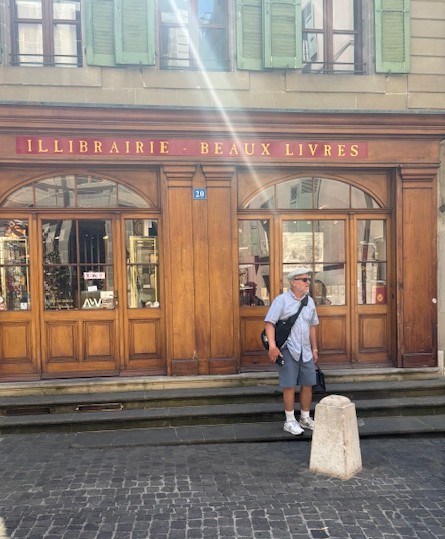
There was a limited opportunity for book shopping. First, there is always the logistical problem of having to haul anything you purchase in your back on the plane. Moreover, most of the smaller bookshops understandably limit their offerings to books written in French and German. One of the more interesting looking shops was in the old city section of Geneva shown here. Denise took the picture because I was basking in some meaningful light as if the Angel Gabriel was about to descend upon me to make a book recommendation. But alas, the shop was closed.
We made a day trip from Zürich to Bern and to specifically spend time in one of the country’s largest booksellers Buchhandling Stauffacher, which has almost an entire floor of English language books. After riding trains all over the country, I was intrigued to learn more about how these routes came about. An employee Michael directed me to The Best Swiss Train Rides written by Diccon Bewes. Train travel in Switzerland goes back to the mid-1850s and the author captures the charm of taking a small train trundling up a mountain along with other faster trains through other scenic areas. We never sat in an automobile during the entire trip.
In Bern, Denise (shown here locked into serious book shopping mode) found two books she liked The Gilded Chalet: Travels Through Literary Switzerland by Padraig Rooney and Christian Kracht’s Eurotrash.
Unexpected Lit Experiences
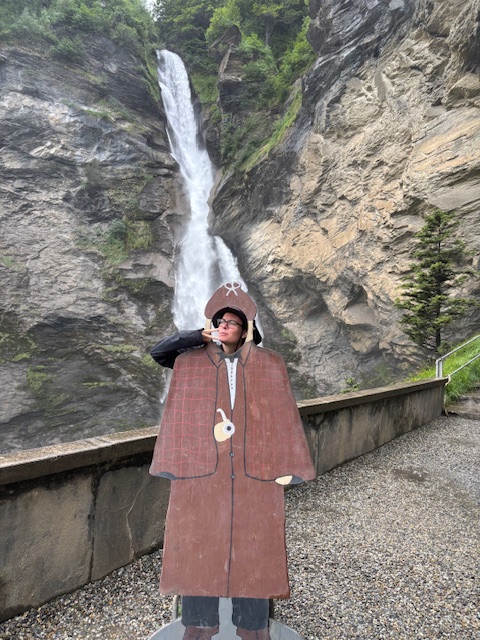
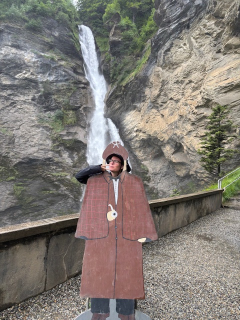
Before my arrival, I was aware that the small city of Meringen is a pilgrimage destination of Sherlock Holmes fame. Sir Arthur Conan Doyle himself vacationed in Meringen enough that he decided to end his Sherlock Holmes saga by having Holmes – locked into a death struggle with his arch enemy Dr. Morarity at Reichenbachfall, which looms just outside the town.
In this photo my older daughter Cynthia re-interprets the last moments of the great detective.
In this photo my older daughter Cynthia re-interprets the last moments of the great detective.
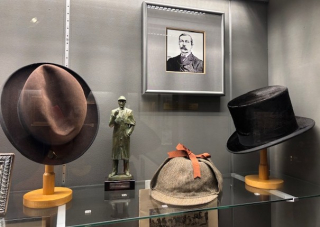
In Meringen there is a quaint little museum which includes a re-creation of Holmes study and collection of his favorite hats. One expected Benedict Cumberbatch/Robert Downey Jr./or Basil Rathbone himself to pop up and guide the tour.
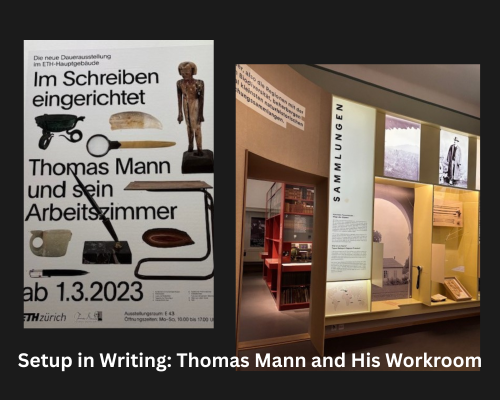
I did not know that Thomas Mann spent the last years of his life in Zürich. Forced to leave his homeland of Germany in 1933, Mann spent time in Czechoslovakia and the U.S. before returning to Switzerland at the end of his life. He is buried just outside of Zürich and I thought about visiting the gravesite until I found out that the Thomas Mann Archives is housed more conveniently at the University of Zürich, which I visited on my last full day in Switzerland. Basically, the archive was just a couple of rooms but what it lacked in sized it made up of a motherload of scholarly materials.
Switzerland Train Books. Book shops in Zurich and Bern Geneva, Thomas Mann Magic Mountain. Thomas Mann Archives, Sherlock Holmes Meringen
Last month Denise and I took our grandsons to their local library to sign them up for the summer reading program with swag, recognition and motivation to read. And I was thinking “I’m jealous, I wish I could be in a summer reading program.”
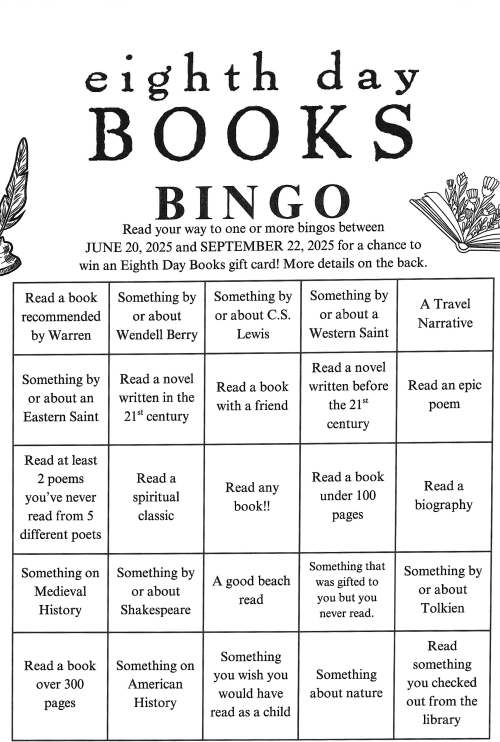
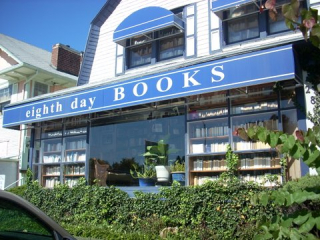
But now thanks to the Eighth Day Books in Wichita, Kansas I can. I ‘ve known the folks at Eighth Day Books since 2009. They even carried the original The Book Shopper: A Life in Review when no one else did. The store is owned and operated by Warren Farha who has a storefront house crammed with books. I’ve written a couple postsabout them in the past. They used to publish a kick-ass book catalog which was an education in itself.
Now you can join a summer reading program for serious adult readers.
Here are the details from their Facebook Page.
Hello Eighth Day Readers!! Please join us for summer reading BINGO starting June 20th! Anyone is eligible to play. Please see the rules below as well as the BINGO card attached. Come to the store or call if you have questions!
EDB 2025 Summer Reading Rules
1. Use the categories in the Eighth Day Bingo grid to help you decide your summer reading list!
2. Any books read between June 20, 2025 and September 22, 2025 are eligible to count towards a bingo.
3. A bingo consists of reading 5 books in five different categories that correspond to squares going across, down, or diagonal.
4. For every bingo, you earn a raffle ticket that makes you eligible to win a $100 Eighth Day Books gift card, a $50 Eighth Day Books gift card, or an Eighth Day mug.
5. Signup by submitting your name, email, and phone number at the Eighth Day front counter or by calling the store at (316) 683-9446. Once we have your info we will give you your bingo card or email it to you upon request.
6. Everyone’s a winner! Anyone who signs up for bingo and reads at least one book this summer will be invited to a social at Eighth Day Books (Date and Time TBD) that will include an exclusive in-store sale!
An Important Note: The goal of Summer Bingo is to encourage people to read as a community and promote fun, local discussions about good books. If you have questions about whether a particular book qualifies for a particular category, please feel free to ask us. Our goal is not to be super technical in what qualifies for a particular category! Also, we will accept bingo submissions on the honors system but will limit cards to one per customer.
Happy reading!
EXTENDED BODY:
EXCERPT:
KEYWORDS:
Eighth Day Books, Summer Reading
AUTHOR: Murray Browne AUTHOR EMAIL: murray.browne905@gmail.com TITLE: Rick Atkinson Was Here: A Mini-Review STATUS: Publish ALLOW COMMENTS: 1 CONVERT BREAKS: wysiwyg ALLOW PINGS: 0 BASENAME: rick-atkinson-was-here-a-mini-review CATEGORY: Military History
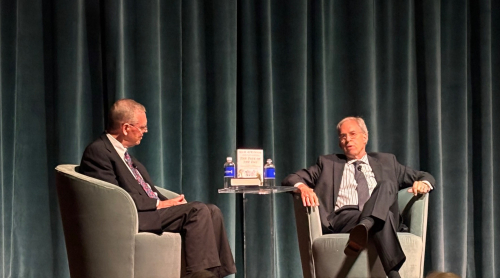
When & Where. On Thursday evening, May 22nd The Atlanta History Center hosted military historian Rick Atkinson in conversation with history professor Patrick Allitt. Atkinson was on tour promoting the second book in his Revolution Trilogy The Fate of the Day The War for America, Fort Ticonderoga to Charleston, 1777-1780
Attendance. The well-airconditioned McElreath auditorium seats 417 people and it was over 90 percent full. For non-AHC members you could purchase a ticket for $12 and you were not required to purchase the book, (but you can do that here). I already had my copy and I appreciated not having to purchase another book to see him, which is how things are done nowadays when a well-known author is on a book tour. The Atlanta History Center is in the middle of the affluent Buckhead neighborhood, and it was best dressed crowd I had ever seen at a book event. Several front rows were reserved for what I assume were the major donors, which remained empty until right before the program when they paraded up to take their seats. Many had drinks in hand.
Why I Went. Atkinson is also the author the Liberation Trilogy about World War II. My longtime partner Denise and I attended both of those lectureswhen he was at the Decatur Library years ago. He was knowledgeable and gracious and were able to chat with him briefly. I was hoping for the same experience at the AHC, but understood that probably wasn’t going to happen. The affable and erudite Allitt teed up Atkinson with brief questions, but with Atkinson there are no short answers. Allitt asked Atkinson about how he managed to fold so many the details into the book such as the terrain, the weather, the foliage and Atkinson made it clear that he did not make any of it up. Atkinson reminded us that in the 18th century people wrote extensive letters (Brits and Americans alike). There are almost 200 pages of notes and sources at the end of the book.
The conversation lasted about 45 minutes with about 20 minutes for Q & A. There was a signing of books afterwards, but I did not wait around.
Someone from the audience asked Atkinson about Lin-Manuel Miranda’s Broadway musical “Hamilton.” Atkinson said he had seen the musical and it was a “a work of genius” and “a work of art, but not history.”
Final Takeaways. Atkinson does resemble another military historian and storyteller Shelby Foote, the writer of the Civil War Trilogy and the star of Ken Burns Civil War series. Coincidently, Burns has a new six-part documentary on the American Revolution coming out this fall on PBS and Atkinson said that he was interviewed for the series. Below is a video where Burns and Atkinson share a stage on Concord’s (MA) Carlyle High School talking about the upcoming documentary.
Perhaps the best judge of the quality of the evening was Denise, who had not read the book, but like the majority of the audience she was thoroughly engaged by Atkinson’s storytelling. Moreover, there were lessons learned by all that origins of our country were bloody, violent, and the schism between the Loyalists the rebel Americans who wanted independence rivaled the more familiar War Between the States.
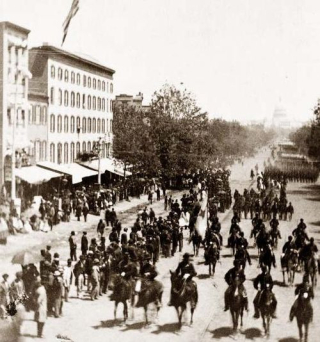
Last year I reposted the “Memorial Day Archives” which gives an account of General William Tecumseh Sherman’s Army of the West joining the Grand Review in Washington in May 23 and 24th, 1865.
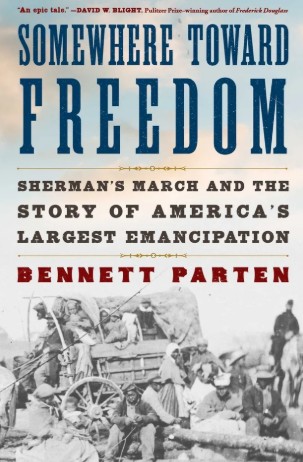
But this year there is an addendum to the post which comes from a history book I read earlier this year–Somewhere Toward Freedom: Sherman’s March and the Story of America’s Largest Emancipation (2025) by Bennett Parten.
As you would expect there are details about Sherman’s March to the Sea, first to Savannah and then up through the Carolinas ending with the Joseph E. Johnston’s surrender to Sherman in April, 1865. But the main thrust of the book is the logistics, and the little-known history of how the newly freed slaves joined the Army (or followed the Army). Some worked for the Union Army as cooks and builders and others were women and children (refugees) that followed near the Union Army, but were subject to deathly harassment by Confederate cavalry. Parten does not sugar-coat the suffering endured by the enslaved peoples.
What ties it into Memorial Day, is that the book closes with Sherman’s Army of the West marching through the streets of Washington D.C. during the Grand Review, but Parten adds to its historical significance because behind Sherman’s army were the freed families that had followed Sherman from Georgia through the Carolinas and Virginia had joined the parade. In the words of one observer, it was “more touching in some ways than the proud passing of soldiers.”
In the Epilogue, Parten summarizes the campaign differently than militarily. He writes, “…like Yorktown, Gettysburg and Selma, Sherman’s March to the Sea was a landmark moment in the history of American freedom.”
A more complete review of the Parten book can be read if you scroll down at Reading Notes 2025.
EXTENDED BODY:
EXCERPT:
KEYWORDS: Somewhere Toward Freedom. Sherman’s March to the Sea, Bennett Parten