This posting begins with a brief excerpt from the archives of my now decommissioned The Book Shopper blog. On 6/18/2020 I wrote:
Book Shopper Archives
The Excerpt
Several of my recent reading choices in the past six months have been a direct result of my subscription to The Sun Magazine out of Chapel Hill, North Carolina. The Sun Magazine is a monthly literary publication of essays, fiction, poetry and photography. Each issue has an in-depth interview with a person who presents a thoughtful perspective on a timely issue whether it is political, cultural, or environmental. Here is one of the recent interviewees that may interest you as well as her book.
Leah Penniman is an author, educator and activist and co-founder of Soul Fire Farm, which is more tha a working farm, but “a training ground for aspiring people of color who come there to learn about sustainable agriculture and reclaim a connection to the land severed by centuries of trauma and oppression.”
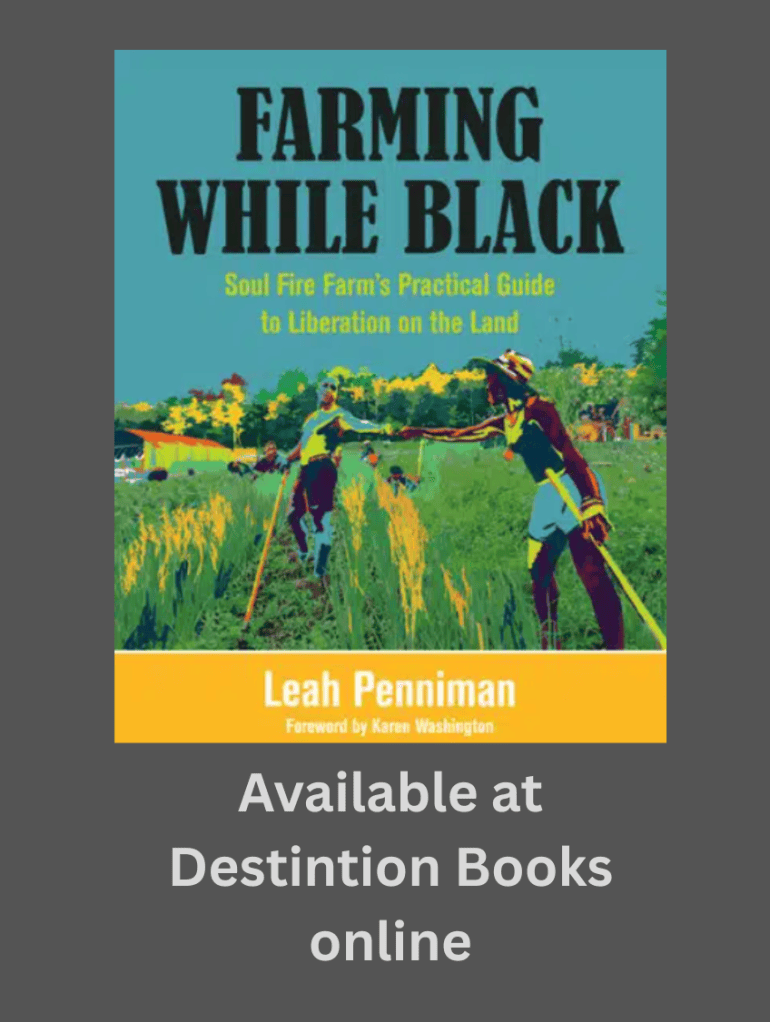
I read her Farming While Black: Soul Fire Farm’s Practical Guide to Liberation on the Land, which is a rare blend of black history, activism, and practical advice for those interested in community gardening and tips on growing better fruits and vegetables.
This 2019 interview inspired me to contact her publisher Chelsea Green to carry some of the publisher’s books in my early days as Destination: Books popup. A link to the 2019 interview is here.
A Follow up: Another Interview with Leah Penniman in the Fall 2026 issue of The Believer
This interview is an in-depth follow-up to Soul Fire Farm, which not only has maintained and expanded its activist roots while staying true to its early mission. The Believer interview is here.
If you read these interviews, you cannot be inspired and curious (as I was) about Farming While Black. One thing that struck me is Penniman had to conscious manage her “on farm/off farm” combo work balance. There were many demands as a speaker- writer and advocate, and during her book tours it led to a personal crisis. She consciously pulled back to spend equal time on the farm. She said in the interview:
I know it’s unconventional for an executive director to be digging rows and harvesting carrots, too, but I have to do that.
Whenever I do pop-up at the Oakhurst Wylde Center or the Freedom Farmer’s Market at the Carter Center, I bring a copy of the book and encourage anyone who is seriously interested in community gardening and fighting food apartheid to give it some consideration.
(Note: In the Fall 2026 article says that racial justice advocates now have “encouraged using the term food apartheid over food desert. The desert metaphor can make the absence of access to healthy food sound natural, like a desert, instead of actively produced by power structures.”)


Leave a Reply