GRSG 2026 Reading Notes

This is our sixth year of two-person book club known as the Gravity’s Rainbow Support Group (GRSG) which began with our first book Gravity’s Rainbow by Thomas Pynchon during the Pandemic. Our notes are filled with observations, sidebars, anecdotes and usually conclude with an insightful Francis’ Amazon Review,
Links to Murray’s online bookshop (Destination: Books) have been provided in case visitors want to purchase the book and support Murray’s addiction to blogging.
Patina: A Profane Archaeology by Shannon Lee Dawdy
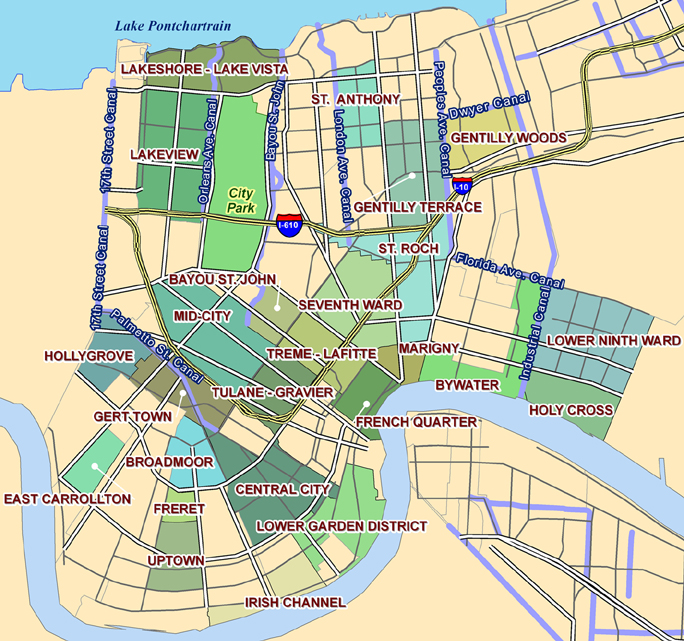
This book came about when Murray visited New Orleans last fall to catch up his daughter Cynthia who was in the Crescent City for an anthropology conference. Dawdy who is an associate professor of anthropology at the University of Chicago was a speaker at the conference. Cynthia thought I would like the book and sent it to me afterwards.
Published in 2016, Patina is centered in New Orleans where Dawdy has done much archeological work digging through layers of New Orleans history and then combining her findings with her academic musings. Here’s some of main areas of the book, which is a relatively short work (150 pages) but it is chocked full of revelations and speculations depending on your point of view. Either way it is a challenging and thought- provoking work.
Patina and Pastness Defined
In the first chapter, Dawdy defines patina in contemporary English as:
(1) ” a surface appearance of something grown beautiful esp. with age or use” (2) “an appearance or aura that is derived from association, habit or established character” and (3) “superficial covering or exterior” Patina thus has an aesthetic quality with connotations of age, is a signifier of certain social habits, and can be artificially created or fakes.”…’it is these three meanings that imply some ambivalence”
It is ambivalence and connotations about patina that acts as starting point giving Dawdy a license to riff.
One particularly redolent phrase, “Katrina Patina,” referred to the multihued encrustation that water and mold left in horizontal strata upon houses, possessions, and even the people sullied by the hard work of cleanup.” (Chapter 1)
Ruins and Heterogenous Time
IF you’re going to talk about ‘pastness’ you cannot due so without talking about time. Dawdy writes, “Time for him (Walter Benjamin) was not a series of linear strings laid end to end but a twisted knot.” She defines ‘pastness” as a quality that is sensed (not remembered not narrated) and experience filter through the flux of time.” (page 25 – page numbers represent the University of Chicago Press print edition)
Of course, some of these passages can be described–as Francis put it–as doosies:
Edmund Husserl argued that time understood as a steady sequence of linear events is a highly abstracted representation of what our consciousness experiences as a sensual flux of echoes, cycles, and retentions, akin to multipart music. In the phenomenological view, the content of experience matters more than the form of timekeeping (seconds, days, years). The phenomenological intervention of the early twentieth century marked a radical break with Western beliefs in objective and progressive time, or what Walter Benjamin called empty, homogeneous time. (Page 29)
As you can gather, Dawdy synthesizes from many sources, which is not always clear but they worth trying to comprehend. One of the more straightforward sections of this chapter is her deep dive into the House of the Rising Sun.
Certainly, all of us at a certain age can remember the Animals version of the song but did you know that the song descended from an English ballad and was recorded by folksingers in the 1830s a century earlier in Appalachia.
The hotel or house of the Rising Sun is a much sought after location for New Orleans visitors.
…the well-known folk song “House of the Rising Sun,” popularly interpreted as the lament of a fallen woman who surrendered to fate in a New Orleans bawdy house. (It’s been the ruin, of many a poor boy….don’t spend your time in sin and misery, in the house of the Risin’ Sun). This is a case of a beloved old story in search of a material home—of the satisfying verification provided by tactility. It was a yearning shared by many of my archaeological colleagues, who were disappointed with my hesitancy to authenticate the site as the House of the Rising Sun. Page 69 (She makes a good point here, it applies to myth or song and why people wanted to find the Wreck of the Edmund Fitzgerald, the lost city of Atlantis, and of course Noah’s Ark – Francis).
The hotel closed between 1838 and 1840 to make substantial repairs. Given the youth of the building, but also the great weight of its four stories of brick, we can infer that the building suffered considerable subsidence due to the instability of the rotting Rising Sun Hotel debris and the soft soils upon which it was built. This would have led to sloping floors, bent door and window frames, and cracking plaster, among other problems. – Page 73
The song fits perfectly with the dens of inequity we associate with New Orleans.
A Haunted House Society
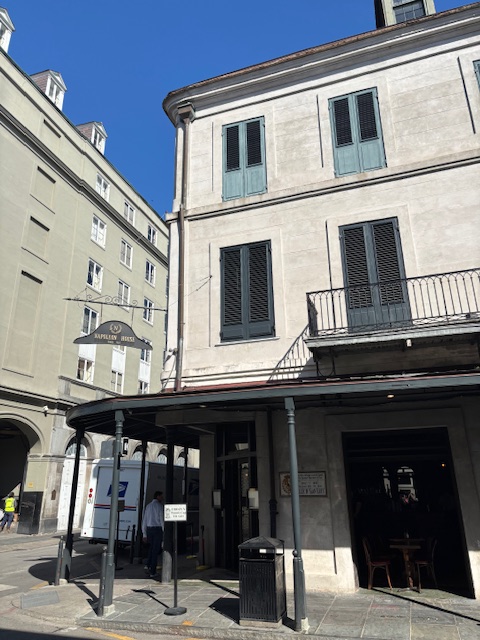
The Napoleon House in the French Quarter. Originally built in 1794 and expanded in 1814 to accommodate Napoleon Bonaparte in exile. It was part of Murray’s walking tour. Dawdy refers to the restaurant as “among the most patinated in the French Quarter.”
In the book we learned about why the ghost of Walt Disney and others remain a part of the city and its numerus ghost tours. (Walt Disney wanted to build Disney World in nearby Slidell, Louisiana but would not succumb to the shakedown by Louisiana politicians.)
Antique Fetishes
A couple of worthy passages about antiques:
“As cultural capital, antiquities and antiques are mobile and fungible but not necessarily available for public display. Their illicit route disqualifies them from becoming what Malinowski called “objects of parade.” Their stories cannot be told, at least not too loudly. They represent a highly rarefied form of inconspicuous consumption.” – Page 135
“For Ann and other New Orleanians, participating in the antique market is akin to attending a jazz funeral—it is a local pastime that creates a sense of community and requires local knowledge to fully appreciate. “- Page 128
Mardi Gras

In this chapter Dawdy includes Mardi Gras souvenirs and the significance of the cheap beads that are thrown to tourists. There worth is based on that it marks an event and how gauche for a tourist to buy beads at a shop.
A case in point. This necklace belongs to Murray’s stepson Sean who was cleaning out closets in his last trip home. Most things were tossed but unsolicited he kept this necklace from his trip to Mardi Gras when he was in high school.
Francis’ Review
We finish with another tradition Francis’ Amazon Review. (It had a lower rating, but Murray who liked the book convinced him otherwise.)
Overflowing
Karl Popper wrote that aiming at simplicity and lucidity is a moral duty of all intellectuals and that lack of clarity is a sin. If so, Shannon Lee Dawdy’s “Patina”, has both saintliness and sin. Her descriptions of archeologic excavations, interviews and public records are straightforward, informative and engaging. However, her asides based on her notions of the space-time continuum, psychoanalysis and 19th century economics baffle and befuddle. Contravening the law of supply and demand, she cites Marx to posit that the value of a commodity can only be reliably measured by the labor-time that went into its manufacture. In explaining physical patina, she cites Husserl, who “…. argued that time understood as a steady sequence of linear events is a highly abstracted representation of what our consciousness experiences as a sensual flux of echoes, cycles, and retentions, akin to multipart music. In the phenomenological view, the content of experience matters more than the form of timekeeping (seconds, days, years).” One wonders if the molecules on the oxidized surface of houses and antiques are properly acquainted with this definition. Readers willing to dig through the crust of such academic meanderings, will be rewarded by her descriptive passages on the remains of saintly old churchyards, the sinful “House of the Rising Sun”, the devastation of Katrina, and the unextinguishable beliefs in local ghosts which provide insight into the zeitgeist of the city. While the book has limited appeal to a general audience, those with an academic bent and a taste for extended metaphor will find it has much to like.
The Sea Captain’s Wife: A True Story of Mutiny, Love, and Adventure at the Bottom of the World by Tilar J. Mazzeo
It seemed only natural or destined that GRSG this book because it fit so well with other books that we have read the past couple of years. For example:
- Billy Budd by Herman Melville (a short maritime novel set in mid-19th century)
- The Gales of November by John Bacon (The Wreck of the Edmund Fitzgerald)
- Smoke and Ashes: Opium’s Hidden Histories by Amitav Ghosh (Lots of clipper ships delivering the goods)
- Under the Eye of Power: How Fear of Secret Societies Shapes American Democracy by Colin Dickey (e.g. The Masons)
- The Magic Mountain by Thomas Mann (tuberculosis was a “player” in both books)

Mazzeo who grew up in Camden, Maine wisely selected Mary Anne Patten (1837-1861) and her ship captain husband Joshua Patten (1827-1857) as the central focus of this maritime adventure. Not only was Mary Anne Patten extraordinary and heroic, but she was uncanny in her mathematical/navigational skills, and it turns out able to withstand the worse possible conditions (ailing husband, pregnancy and handling the crew that teetered on mutiny. She was nineteen years old at the time.
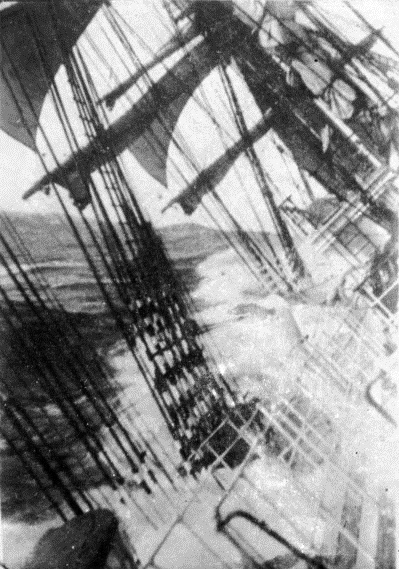
Mixed in with her story is a glimpse of the world of clipper ships and two perilous trips from New York harbor through the Cape Horn and the Drake passage to San Francisco. Mary accompanied her husband on both voyages and adding to the compeling narrative is that it was also a race between clipper ships on which vessel would reach San Franciso first. (This photo of an unidentified ship around Cape Horn comes from Wikimedia Commons)
“There are old captains and there are old captains but there aren’t old and bold captains.”
(such is the case with Joshua Patten who was bold but died young.
Combine this with her husband being stricken with tuberculosis and later meningitis and her bouts later with typhoid fever you get a fair dose of misery porn, but Francis appreciated the medical aspects of The Sea Captain’s Wife. However, Patten did not keep a diary or wrote letters to her husband so Mazzeo had to fill in the blanks the best she could relying on newspaper accounts and birth and property records. This contributed to slight lack of depth surrounding the dutiful Mary especially when compared to Louisa May Alcott of Little Women fame who wrote a book entitled Hospital Sketches (more about this in Francis’ final review later).
Fun Facts
One of the strengths of the book is Mazzeo is how she will interweave related lore to the story whether it be the origins of the word “nauseous” and the words origin pertains to sea-sickness or why women’s bare breasts often grace the bow of a ship (superstitious sailors believe “they can calm ferocious waters.)
Francis and I agree that the story about Matthew Maury who published Wind and Current Chart of the North Atlantic in 1847 soon changed the way sea captains plotted their courses across oceans. Mazzeo writes:
Matthew Maury’s charts no longer hold the public in thrall. But perhaps they should. The charts were among the most important technological and scientific advances of the nineteenth century, and, while they represent the first “big data” project in the United States, Maury’s charts quickly became, as well, an astonishing example of what crowdsourcing and citizen science could accomplish – p242
On the Downside
There is nothing particularly noteworthy about Mazzeo’s prose, but one does question how she likes to interject current thinking into history (i.e. the Maury quote about big data project and what about the census which began in 1790.) can stick out. She also expands the importance of Mary Patten’s fame in her final years and does go on and on about her son Joshua, who suffered from epilepsy and other misfortunes.

There are only two maps at the beginning of the book (in contrast to the Gales of November which had several detailed maps. Also, there was no real detail of the Cape Horn and Drake’s Passage which played such an important role in the narrative. (So we included one here.) There was no index, but Mazzeo did provide extensive notes which was quite impressive.
Francis’ Review
We finish with Francis’ Amazon Review. (Originally it was higher, but Murray who liked the book less convinced him to take it down a notch.)
GRSG 2026 Reading Notes This is our sixth year of two-person book club known as the Gravity’s Rainbow Support Group (GRSG) which began with our first book Gravity’s Rainbow by Thomas Pynchon during the Pandemic. Our notes are filled with observations, sidebars, anecdotes and usually conclude with an insightful Francis’ Amazon Review, Links to Murray’s…
The Austrian writer, Maria von Ebner-Eschenbach (1830-1916) wrote: “Unbending stamina and uncomplaining self-denial are the two extreme poles of human strength.” It is possible she wrote this thinking of the grit of her contemporary, Mary Patten (1837-1861), the heroine of this book whose story made headlines across the world. At 19 (see image), while pregnant, she faced off a mutinous first mate on board a clipper ship as her husband, its commander, was waylaid by tuberculous meningitis, and as the ship was crashing through the waves of a stupendous storm at Cape Horn, one of the most dangerous seas of the world. She won over the crew, and with her own leadership and navigational skills, guided the ship safely to San Francisco, while tending to her deathly ill spouse. But the gale was only the first of a series of metaphorical storms that she faced, which in rapid sequence, included icebergs, typhoid, malaria, childbirth and financial duress. Another contemporary of hers, Louisa May Alcott (1832-1888) grew up nearby in Massachusetts, and wrote: “Simple sincere people seldom speak much of their piety. It shows itself in acts rather in words, and has more influence than homilies or protestations”, which could also have described Mary Patten, who left behind few records of her own words for historians to gauge her thoughts. The author of this book, Tilar Mazzeo, does a remarkable job reconstructing this young woman’s life from the material available without succumbing to the temptation of embellishment. She describes in detail, at times too much, her and her husband’s predecessors and their environs, to give readers an idea of the people and customs that shaped the development of this remarkable woman. Nathaniel Hawthorne, a distant relative of Mary Patten’s husband even makes a cameo appearance, as a custom’s officer in London. This approach sets the scene for her intrepid actions, which, as described by Sebastian Junger in The Perfect Storm, were almost forced upon her by seaborn circumstance. In describing the aftermath of her remarkable achievement, and the celebrity that ensued, the author suggests how it was one of many factors that contributed to society’s evolving recognition of the equality of women. This book is ideal for people interested in learning how even those of the most unprepossessing backgrounds in 19th century New England could surmount incredible odds and become accomplished at an early age. Those wishing for more psychological insight into Mary Patten’s mindset may benefit by reading “Hospital Sketches” by the Louisa May Alcott, quoted above, as she describes first-hand a ship journey to Washington DC, nursing injured Civil War soldiers back to health in the Union Hotel Hospital, and surviving a bout of typhoid fever. In any case, “The Sea Captains Wife” is a well-written account of a thrilling adventure and the challenge of living in the pre-Civil War era. Highly recommended.
The Forbidden Garden: The Botanists of Besieged Leningrad and Their Impossible Choice by Simon Parkin
By Simon Parkin
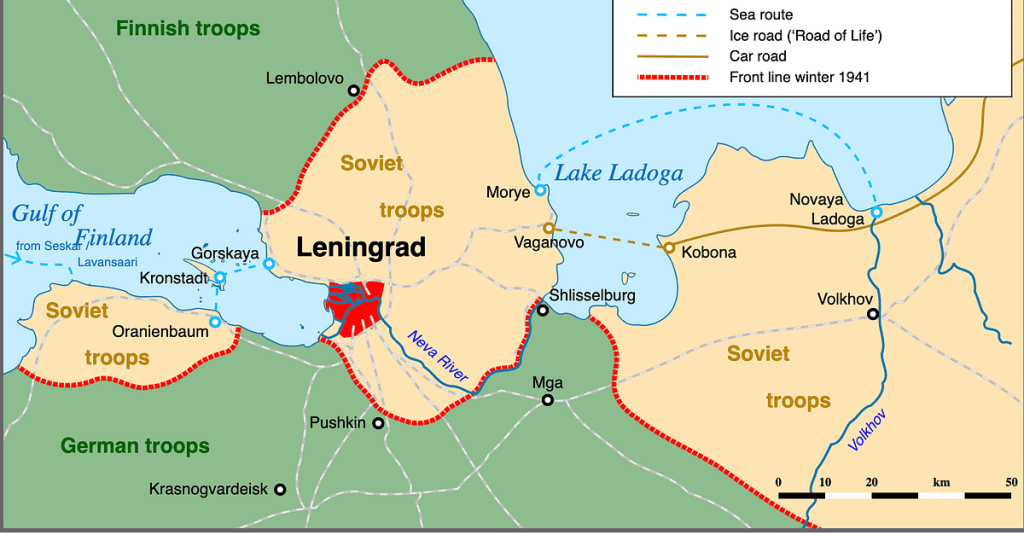
This book caught our attention when it was published with some acclaim in 2024. It moved to the head of the queue because Murray wanted to evaluate the book as a possibility for his Destination: Books pop-up ( I carry many garden-related books and my customers also like history.)
Founded by world renown botanist Nikolai Vavilov, the Plant Institute of Leningrad was the flagship of seed and botany research, which began in the 1920s. Eventually it held hundreds of thousands of seeds, but when the Germans invaded Russia in June of 1941, they laid siege to Leningrad. The driving plot was “As employees of the world’s first seed bank, the botanists were the only people to have been faced with this ultimate and fundamental dilemma: to save a collection built to eradicate collective famine, or to us the collection to save themselves.”(p.155)
But there were also other thick threads that ran throughout the book, which was well-written and compelling.
Stalin
This book reminded Murray of Timothy Snyder’s Bloodlands: Europe Between Hitler and Stalin (2010) an in depth and graphic history of how the policies of these two dictators were responsible for the mass murder of 14 million combatants.
In The Forbidden Garden, Parkin zeroes in on how Stalin and Hitler starved and murdered the citizens of Leningrad.
Lysenko
Trofim Denisovich Lysenko (you must learn to roll with the long Russian names in this book) was as Francis points out – the RFK Jr. of his time. In this assembly of quotes you can see the parallels.
Page 21; Lysenko argued that genetics, represented a waste of time and resources: one simply had to train plants to meet one’s goals, a theory he named vernalization. Lysenko’s outlier theory resonated with the country’s leader, Joseph Stalin, who approved of the idea that plants, like workers, could be transformed by an act of political will…… Page 21; Stalin also liked that, unlike Vavilov, Lysenko came from peasant stock, and that his theories did not rely on academic laboratory work. Better still, at a time when millions of Russians and Ukrainians were perishing from starvation caused, in part, by poor crop yields, Lysenko promised Stalin that he could meet the demand for improved crop varieties within three years, seven fewer than Vavilov estimated his work required to produce results. )
Page 23 Later that year, while Vavilov was away on a scientific expedition, Lysenko replaced the twenty-seven senior scientists who served on the Plant Institute’s scientific council with his own followers. One such follower was Isaak…”Prezent who coauthored articles with Lysenko and coedited the journal Vernalization, which dismissed the entire field of genetics as a “pseudoscience.” Prezent helped Lysenko organize vast experiments and publish the dubious results and crafted compelling statements designed to uplift Lysenkoism, denigrate his opponents, and propel his protégé from the sphere of science to that of politics—to each man’s mutual benefit. (Page 63)
Starvation: Eating Famous Dogs
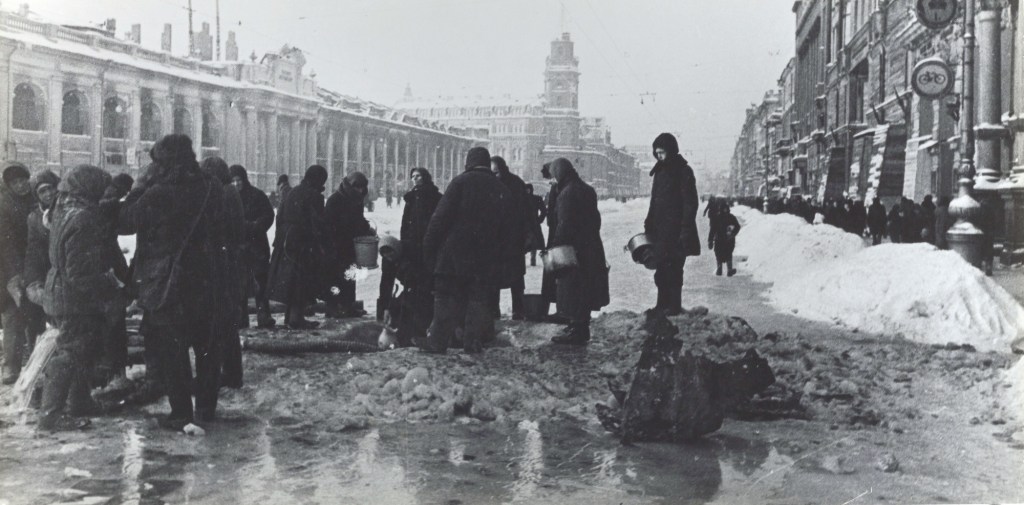
Parkin graphically writes about how exactly people starve to death and how the body slowly eats away any fat and then when that is gone how it attacks the organs, which is fatal. Coupled with the sub-zero temperatures of the Winter of 1941-2 when temperatures reached -40 degrees Fahrenheit it is estimated that at least 649,000 had succumbed to starvation.”
In one of the more poignant examples was the degree of how dogs and cats were devoured. “The smallest Leningrad children,” one journalist recorded, “grew up not knowing what cats and dogs were.” The siege wiped out urbanite sentimentality toward animals. At the Physiological Institute, famished researchers ate physiologist Ivan Petrovich Pavlov’s renowned dogs.
Strong Endings
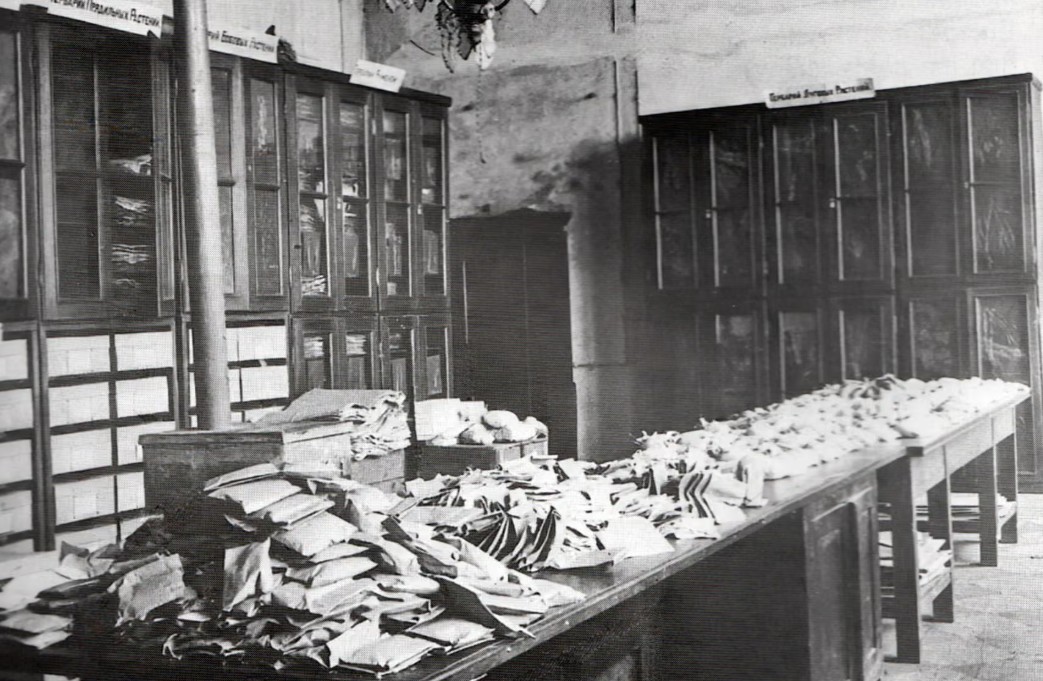
Like any good non-fiction book, Forbidden Garden ends strong with Parkin providing background on how he found source materials and his indebtedness to Ukrainian writer and academic Mark Popovsky who began gathering materials and files on in the mid-1960s. Popovsky had the Soviet Union’s attempts to hide the truths about Stalin’s Reign of Terror and the fate of Nikolai Vavilov.
Following Parkin’s lead we finish strong with Francis’ Amazon review. Also, the book is available for purchase on the GRSG section of the Destination Books online store.
GRSG 2026 Reading Notes This is our sixth year of two-person book club known as the Gravity’s Rainbow Support Group (GRSG) which began with our first book Gravity’s Rainbow by Thomas Pynchon during the Pandemic. Our notes are filled with observations, sidebars, anecdotes and usually conclude with an insightful Francis’ Amazon Review, Links to Murray’s…
GRSG 2026 Reading Notes This is our sixth year of two-person book club known as the Gravity’s Rainbow Support Group (GRSG) which began with our first book Gravity’s Rainbow by Thomas Pynchon during the Pandemic. Our notes are filled with observations, sidebars, anecdotes and usually conclude with an insightful Francis’ Amazon Review, Links to Murray’s…
 murraybrowne.org